
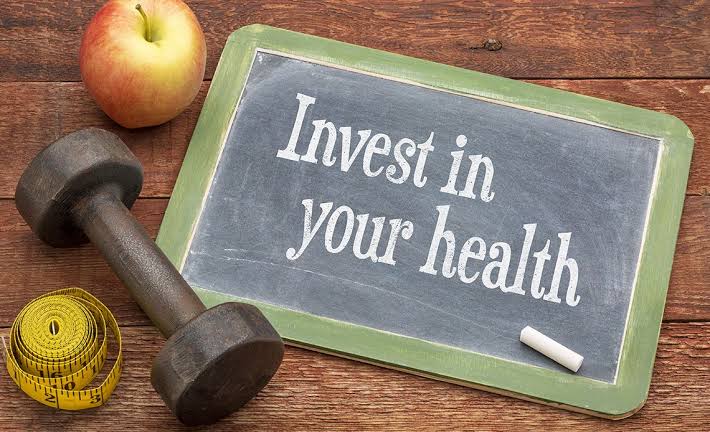
For Healthy Aging Month this year, we are focusing on how to preserve independence through each decade that passes. Independence is one of the top priorities on surveys of senior health concerns and research continues to show that as independence wanes, so does cognition, physical abilities and overall quality of life.
The concept of investment is familiar so let’s use that as our well-being analogy. Most of us spend decades preparing financially for retirement, contributing to retirement accounts and diversifying investments with the assumption that small, consistent deposits over time will pay dividends in the future. Now consider how much time and effort most of us spend investing in the body and mind we will be retiring with. Imagine yourself at 85 years old. What do you hope you’ll still be able to do? Perhaps it’s traveling with your spouse, playing with your grandchildren, gardening, volunteering, golfing, hiking, driving to lunch with friends, or simply living independently in your own home. These future goals of independence are also things we can be making small, consistent contribution toward for health payouts later. In fact, research continues to show that many of the greatest threats to independence as we age can be minimized through lifestyle choices (aka investment) made decades prior. To really dig into our investment analogy, let’s focus on four primary investments that will make up the success of your Independence Portfolio.
Investment #1: Your Brain
While cognition does decline slightly as a natural process of aging, lifestyle investments can significantly slow this process as well as push back onset of any more significant decline with health conditions that may be in some genetic profiles. Our brains are incredibly resilient and respond beautifully when taken care of on a regular basis.
One lifestyle strategy to preserve cognition is to give the brain consistent opportunities to create more synaptic connections. The brain thrives on challenge. Learning a new language, taking a painting class, playing a musical instrument, joining a book club, trying a new hobby or simply walking in different paths with variation in terrain encourages the brain to build and strengthen neural connections. You can think of curiosity as exercise for the brain!
Physical activity is equally important for cognitive strength. Regular aerobic exercise increases blood flow to the brain and has been associated with improved memory, executive function, and a reduced risk of cognitive decline. Strength training 2-3 days per week releases growth factors that increase brain volume, structure and connections. Dual tasking exercises such as sports and dance are also considered gold standard fitness for brain health. Other smaller yet equally important long term strategies for cognitive health are managing blood pressure, getting adequate sleep, treating hearing loss when present, and maintaining strong social connections.
Investment #2: Your Muscles
If there was one body part that deserves far more attention in healthy aging, it would be muscle. Muscle is often thought of as something that helps us look fit or lift heavy objects, but its role extends far beyond appearance. Healthy muscle improves blood sugar regulation, supports bone health, protects joints, enhances balance, reduces fall risk, and helps us recover from illness or surgery. Plus we already discussed the importance of resistance training and muscle contraction on brain health! Perhaps most importantly, muscle allows us to continue doing the activities that define independence, such as getting out of a chair, climbing stairs, carrying groceries, lifting grandchildren, or getting up from the floor.
Similar to cognition, we do lose a little muscle mass naturally as we age. However, the amount of loss does not have to be significant enough to impede independence. Strength training 2-3 days per week to challenge your muscles, along with adequate protein intake all contribute to healthy muscles that will support your body at any age. Combine adequate muscle mass with daily mobility and you’re Independence Portfolio is unstoppable.
Investment #3: Your Stability
Stability is the combination of strong muscles, healthy bones, flexible joints, good vision, body awareness, and the ability to react quickly when life throws you off balance. Falls remain one of the leading causes of injury and hospitalization among older adults, yet many of the factors that contribute to falls are highly trainable, especially when training occurs consistently over time. Practicing balance exercises, maintaining leg strength, improving posture, wearing appropriate footwear, addressing vision and hearing changes, and participating in regular physical activity all contribute to greater stability.
One incredibly easy balance exercise can be done while brushing your teeth! Stand on one foot for 20 to 30 seconds while brushing, then switch sides. Hold onto the counter if needed and see if you can let go for a second or two. Not only are you practicing balance and improving your oral health, but this also happens to be a dual task challenge so the brain wins too! Such a smart investment!
Investment #4: Your Community
Studies show over and over and over again that strong social relationships are associated with better physical health, improved cognitive function, lower rates of depression, greater resilience, and even longer life. Longevity experts all agree that the key to long, healthy, independent life is a strong sense of community. Community gives us purpose. It gives us accountability. It encourages us to keep moving, learning, laughing, and investing in both ourselves and each other. Community doesn’t have to mean a large social circle either. It might be a weekly walking group, a church community, volunteering at a local organization, taking a fitness class, attending a senior center program, or scheduling regular coffee with a friend.
Small Investments, Big Returns
The amazing thing about these categories of self-investments is how often they overlap. Join a walking club and you’ve invested in your muscles, your brain, your stability, and your community. Take a dance class and you’ve improved strength, balance, coordination, learning, and social connection in a single activity. Volunteer at a community garden and you’ve combined movement, purpose, fresh produce, and meaningful relationships. Every time you make a small personal health investment, your entire independence portfolio (aka your whole body health) improves in multitudes and your independent retirement just keeps looking better.
