
Parkinson’s Disease (PD) affects nearly one million Americans and that number is rapidly increasing. Most people think of tremors when they think of PD, but may not realize the spectrum of symptoms that impact those with this diagnosis, as well as their loved ones. For Parkinson’s Awareness Month, we want to bring attention to a condition that affects not just movement, but coordination, confidence, and independence in daily life.
While PD is incredibly complex in how it impacts each person individually and often requires a unique concoction of medical management for each patient, it is also unique in how responsive it is to lifestyle management. From symptom management to slowed progression, there are a host of strategies people with PD can employ alongside medication to make a true impact on how their condition affects their lives. This is because of the concept of neuroplasticity, which is the brain’s capacity to adapt and form new neural connections. The more neuroplasticity, the better overall cognitive health and the slower progression of decline. Certain lifestyle interventions act as signals to stimulate neuroplasticity. Movement, learning, recovery and nourishment all improve coordination, reaction time and cognitive function. What’s even better is that this is true for ALL aging populations, with or without PD! Let’s take a look at three primary lifestyle interventions for managing PD.
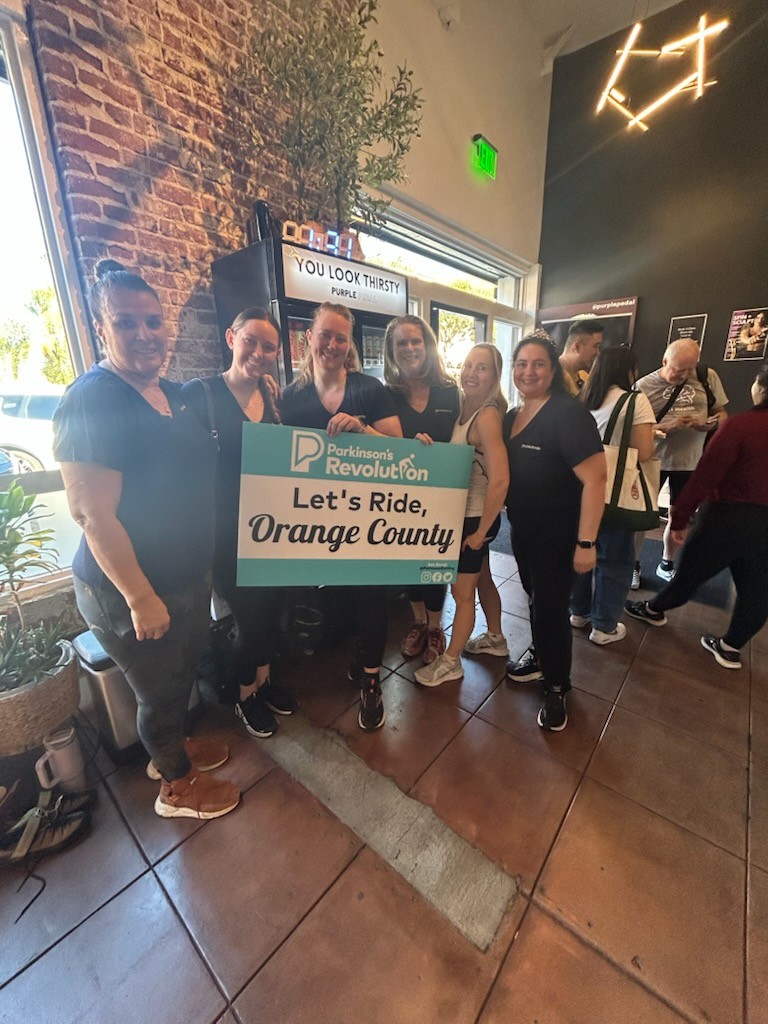
The St. Jude team riding for PD!
Lifestyle Strategy 1: Exercise
Exercise is one of the most well-supported interventions in Parkinson’s care. Research shows that regular movement can improve gait, balance, strength, brain function, and even more day-to-day symptoms such as constipation and sleep. While all of these are reasons to start exercising, possibly the most meaningful benefit long-term health is reduced fall risk. Nearly 60% of people with Parkinson’s will experience a fall each year and about two-thirds of those who fall will fall again within the same year. Falls are a leading cause of emergency room visits, injury, and loss of independence in the senior population overall, but the silver lining here is how much we can reduce fall risk through consistent, targeted exercise programming.
In addition to reducing fall risk, medical fitness programs focused on both cardiovascular and cognitive challenge can minimize symptoms acutely for many with PD and can improve how they interact with the physical world around them, from walking and talking to remembering routines to handling a gait freeze in a doorway. There are several research-backed fitness programs for managing Parkinson’s, such as PWR!, Big & Loud, and Rocksteady, to name just a few. While each program uses different modalities of movement, they all share similar components such as:
- Strength training to support posture and stability
- Balance and mobility work to improve gait mechanics
- Rhythmic or patterned movement to enhance coordination
- Higher-effort intervals (when appropriate) to support brain activation
- Dual-tasking (physical movement paired with cognitive challenges)
With PD, the key to getting positive outcomes from exercise is consistency. Finding an exercise program that is accessible and fun is key since this should be a lifelong fitness prescription commitment.
Lifestyle Strategy 2: Sleep
Sleep disturbances are extremely common in Parkinson’s and often under-addressed. Poor sleep impacts not only energy, but also cognitive function, mood, motor control, and even immune function. Chronic sleep disruption can worsen cognitive symptoms and increase daytime fatigue, which in turn raises fall risk, reduces coordination and activity levels, and impairs overall quality of life. Some people may need more invasive interventions for true sleep disorders, but often all that is needed are some very simple routine changes to significantly improve both sleep onset and length of sleep. The following strategies seem almost too simplistic but are often not being followed consistently. Life exercise, consistency is key to outcomes, and also like exercise, sleep strategies help even those without PD.
- Daytime light exposure. Yep, this one is something to do while awake during the day! Early morning and midday natural light give the circadian rhythm a timestamp, which allows for a more regular onset of sleepy hormones in the evening.
- Minimize evening light. Dim the lights and swap out blue lights for red and orange 1-2 hours before bed. This tells your body that sleep is approaching.
- Eliminate cognitive stimulus pre-bedtime. From excitement to stress, anything that creates heightened emotions will spin in your head when you finally hit the pillow. No global news, difficult conversations or even books so invigorating you can’t put them down an hour before bed.
- Environment for sleep. Cool bedroom, zero lights and as silent as possible are the ingredients for a happy sleep room.
- Human brains love routine and we respond very well. Does just the smell of coffee in the morning perk you up? Find some similar triggers to tell the brain it’s bedtime. Brush your teeth, wash your face and do some stretching all in the same order at the same time. Your brain will catch on.
- Breath work. Sometimes we just can calm the racing thoughts. Forcefully slowing down breath tricks the body into thinking it is calm. A simple count of inhale for 4, hold for 7 and exhale for 8, repeated 15-20 times will have you snoozing in no time! This is also a great technique for chronic stress at any time of the day.
Lifestyle Strategy 3: Nourishment
Nutrition plays a key role in supporting brain and body function in PD. Acutely, adequate protein and calories help to ensure the muscles and bones are fed and prevent both sarcopenia and osteoporosis. Fiber and hydration are critical for maintaining healthy bowel movements as well as a strong immune system. Eating to manage insulin resistance is also important for minimizing inflammation which can translate to exacerbated decline within the brain.
Key considerations for nutrition with PD include:
- Adequate protein to preserve muscle mass and strength
- Fiber-rich foods to support gut health and digestion
- Anti-inflammatory dietary patterns to support overall brain health
- Preparing homemade food and minimizing ultra-processed foods for both the anti-inflammatory effect as well as the social and joyful effects of cooking and eating alongside others.
While each of these lifestyle strategies is powerful on its own, their impact is amplified when combined into an integrated approach:
*Movement improves coordination.
*Cognitive fitness training sharpens response.
*Sleep restores the brain.
*Stress management calms the system.
*Nutrition fuels the process.
At the heart of any lifestyle program for condition management is one goal: to preserve independence and sense of well-being. From getting up from a chair and walking across a room confidently, to remembering your grocery list, to reacting quickly enough to prevent a fall while walking and talking to a friend, these are all real world examples of daily situations that get more difficult with age, and even more difficult with a movement disorder. However, these are also real world examples of situations that pose less of a threat, if any, for those who train for them. While Parkinson’s presents real challenges, it also presents an incredible opportunity to approach health in a more integrated, proactive, and hopeful way by training for life’s daily movements.
Resources for Our PD Community:
- Parkinson’s Empowerment Program: Our 4-week, early intervention program here at St. Jude Wellness Center for patients with new PD and their care partners.
- Parkinson’s Medical Fitness Classes: Our ongoing fitness membership that combines several peer-reviewed exercise curricula for PD management into a twice weekly cohort with your peers.
- Parkinson’s OC: An incredible, living website full of online and local PD resources.
- Parkinson’s Foundation: Articles, blog posts, research, fundraising events. You name it, PDF has a resource for you. (They also happen to be funding our wellness center’s Parkinson’s Empowerment Program through their community grant).
- Michael J. Fox Foundation: Furthering research for PD.
- Davis Phinney Foundation: Resources for you to use NOW in your PD journey.
- American Parkinson Disease Association: Research, Advocacy & Resources.
